How to Write Your Name in Japanese: a Katakana Guide (Plus Kanji Ateji and What Your Name Could Mean)
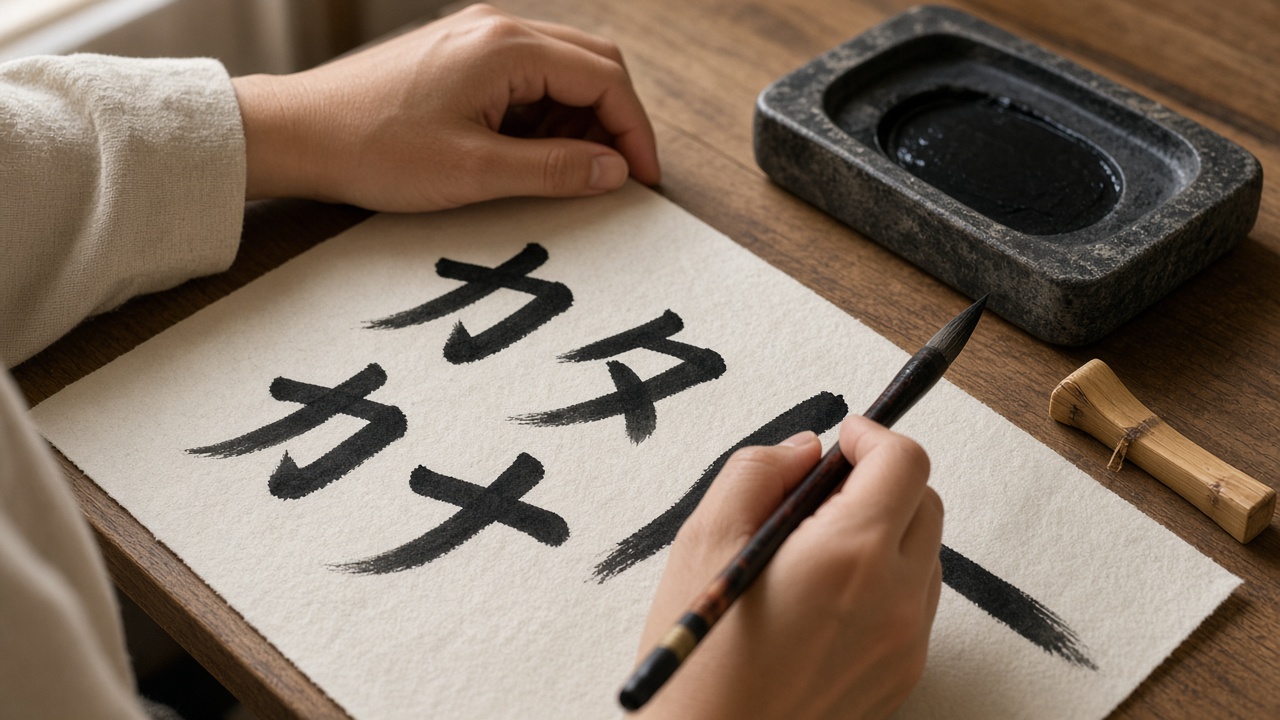
If you have searched for "name in Japanese" or "what does my name mean," you have probably landed on a list of Japanese given names. That is useful if you want a name from Japan. It is less help if you want to know how your name is written when you fill in a form, book a ryokan, or sign up for a language class.
In Japan, foreign names are written in katakana, the angular syllabary used for loanwords. Japanese given names are usually written in kanji, which is why our first names and meanings pages look the way they do. The two systems get mixed up a lot. This guide covers the katakana spelling, a short and honest note on decorative kanji (ateji), and how to see whether a Japanese name in our dictionary shares a sound or a meaning with yours.
You can type a name into our name converter and see the katakana straight away. The table further down uses the same customary spellings.
Why katakana, not kanji
Kanji carry meaning. Katakana carries sound. A Japanese name like Haruto can be written 陽翔, "sun" and "soar," or several other ways. Your name, unless it is already a Japanese name, does not come with official characters. Forms, tickets, bank accounts and residence cards use katakana, or sometimes romaji. People will write マイケル for Michael, not a string of kanji that happen to sound like it.
If you are an EN Vtuber and want to write your name in Japanese, remember to write your name in katakana! As a foreigner you do not have assigned kanji to your name!🥰🙏
— ROXY (@roxymanticore) April 16, 2022
That is the usual practice, even when someone later makes a kanji spelling for fun.
How the spelling works
Katakana is a syllabary: each character is a beat, usually a consonant plus a vowel, plus ン (n) and a few marks. English does not line up neatly with that, so a handful of conventions do most of the work.
Long vowels, ー
The chōonpu, ー, stretches the vowel before it. Mary is メアリー (Mearī), not メリ. Paul is ポール (Pōru). Thomas is トーマス (Tōmasu). If you leave the bar out, the name sounds clipped.
Small ッ
A small tsu, ッ, doubles the next consonant. Jack is ジャック (Jakku). Alex is アレックス (Arekkusu). Max is マックス (Makkusu). Writing ジャク would come out as "jaku," which is a different word.
Small ャ, ュ, ョ
These hook onto the character in front of them to make sounds like sha, chu and kyo. Matthew is マシュー (Mashū). Charlotte is シャーロット (Shārotto). Jessica is ジェシカ (Jeshika).
L and R
Japanese has one liquid sound, written ラ, リ, ル, レ, ロ. L and R both map to it. Laura becomes ローラ (Rōra), Richard リチャード (Richādo), Olivia オリビア (Oribia), William ウィリアム (Uiriamu). The spelling is not trying to pick a side. There is only one row of characters to use.
V
Older loanwords often use the b-column: Valentine is バレンタイン (Barentain). Newer spellings can use ヴァ, ヴィ, ヴ, ヴェ, ヴォ. Our usual spelling of Victoria is ヴィクトリア. You will see both, and neither is a mistake in casual use. Official forms sometimes stick to the older バ row because it is easier to type and to read.
Th
Japanese has no "th." The conventional spelling depends on the name. Thomas is トーマス (the th becomes ト). Ethan is イーサン and Nathan is ネイサン (the th becomes ス). Matthew is マシュー (シュ). There isn't a single rule that covers every name, which is why customary spellings matter.
Final consonants
A Japanese beat ends in a vowel, or in ン. English often ends in a hard consonant, so a vowel gets added. Mark is マーク (Māku), David is デイビッド (Deibiddo), Alice is アリス (Arisu). A final n or m usually becomes ン: John is ジョン, Adam is アダム.
The middle dot, ・
When you write a first and last name, a middle dot separates the parts: ジョン・スミス for John Smith. The dot is called 中黒 (nakaguro). Hyphens in a surname are often written the same way, or sometimes dropped. You do not use a space the way English does.
Japanese names are said family name first, as our guide explains. Foreign names in katakana usually stay in the order the person uses, with the dot between them.
Spellings do vary. People who have lived in Japan for a while sometimes choose the katakana that matches how they say their own name, not the dictionary default. Both デビッド and デイビッド show up for David. If a form already has a spelling for you, keep using it.
Common English names in katakana
These are the customary spellings we use in the name converter. The romaji follows the Japanese beats, so you can hear how the name is being read.
| Name | Katakana | Sounds like | What's going on |
|---|---|---|---|
| Michael | マイケル | Maikeru | final l becomes ル |
| John | ジョン | Jon | final n becomes ン |
| David | デイビッド | Deibiddo | also written デビッド |
| James | ジェームズ | Jēmuzu | long vowel ー |
| William | ウィリアム | Uiriamu | W and L/R |
| Mary | メアリー | Mearī | long vowel ー |
| Elizabeth | エリザベス | Erizabesu | th becomes ス |
| Sarah | サラ | Sara | short and straightforward |
| Emily | エミリー | Emirī | long vowel ー |
| Emma | エマ | Ema | close to Japanese Ema |
| Olivia | オリビア | Oribia | L becomes リ |
| Sophia | ソフィア | Sofia | ph becomes フ |
| Anna | アンナ | Anna | nn becomes ン |
| Jack | ジャック | Jakku | small ッ |
| Matthew | マシュー | Mashū | th becomes シュ, small ュ |
| Thomas | トーマス | Tōmasu | th becomes ト, long ー |
| Laura | ローラ | Rōra | L and a long ー |
| Victoria | ヴィクトリア | Vikutoria | ヴィ for V |
| Charles | チャールズ | Chāruzu | チャ and a long ー |
| Christopher | クリストファー | Kurisutofā | starts as クリス |
| Kevin | ケビン | Kebin | V as ビ |
| Rachel | レイチェル | Reicheru | ch becomes チェ |
| Ethan | イーサン | Īsan | th becomes ス |
| Alex | アレックス | Arekkusu | x and a small ッ |
| Grace | グレース | Gurēsu | hard g, long ー |
If your name is not in the table, try the converter. For a full name, type both parts and it will join them with ・.
my name in katakana is キコ which is cute and fun to write. you can write your name in katakana too! it’s easy and free
— it’s kiko! (@royalpizzaboy) March 17, 2021
A note on ateji (kanji chosen for sound)
Ateji, 当て字, is the practice of picking kanji for their sound, and often for a meaning you like, rather than for an established word. It shows up in old place names, in some brand names, and in the decorative spellings people invent for foreign names.
The converter on this site will offer a kanji idea for a name: one character per sound, chosen from meanings in our dictionary. That is a creative spelling. It is not an official one, and it is not how Japanese documents write a foreign name.
A few caveats, because this is the part that gets people into trouble:
- It is not a legal Japanese name. Registering a name in Japan has rules about which characters and readings are allowed. We walk through those in how to choose a Japanese baby name. A souvenir spelling does not go on a residence card.
- The meaning is assembled, not inherited. 愛 (ai, love) in an ateji spelling of "Ivy" or "Ellie" does not mean the English name itself means love. It means someone picked that character for that sound.
- Some characters are awkward. Kanji have connotations you may not want on a hanko or a notebook. If you care about the result, check each character, or ask a Japanese speaker to look it over.
- Japanese friends sometimes make one for you as a gift. That can be a lovely gesture. It is still a nickname in characters, not a replacement for your katakana name.
My middle school students in japan made this kanji version of my name one time for fun
— Hime (@curewounds) July 16, 2019
If you want a Japanese given name rather than a rendering of your own, start from meaning or from sound in the dictionary, not from an automatic ateji string.
What your name could mean
"Japanese name meaning" and "what does my name mean" are slightly different questions.
If you want the meaning of a Japanese name, use the dictionary. Our names by meaning pages group given names and surnames by the ideas in their kanji: love, the sea, flowers, light and so on. Every first name page breaks the spellings into characters.
Sometimes an English name already overlaps a Japanese one. Emma in katakana is エマ, which is very close to Ema (えま), a girls' name that can be written 恵麻 or 笑真, among other spellings. Naomi is already used in both languages; in Japanese it is なおみ, often 直美 or 尚美. Mai, Hana and Kai also exist as Japanese names, with their own kanji and meanings. The overlap is a coincidence of sound. It does not mean the English name "comes from" the Japanese one, or the other way around.
If you are naming a child and you want an actual Japanese name, the choosing guide is the better starting point, along with the first names list.
Where to go next
Type your name into the name converter for katakana, hiragana and a kanji idea if you want one. You can also browse first names or names by meaning. The short guide is there if hiragana, katakana and morae are still settling into place, and how -chan and -kun work covers nicknames once you have a Japanese name.